
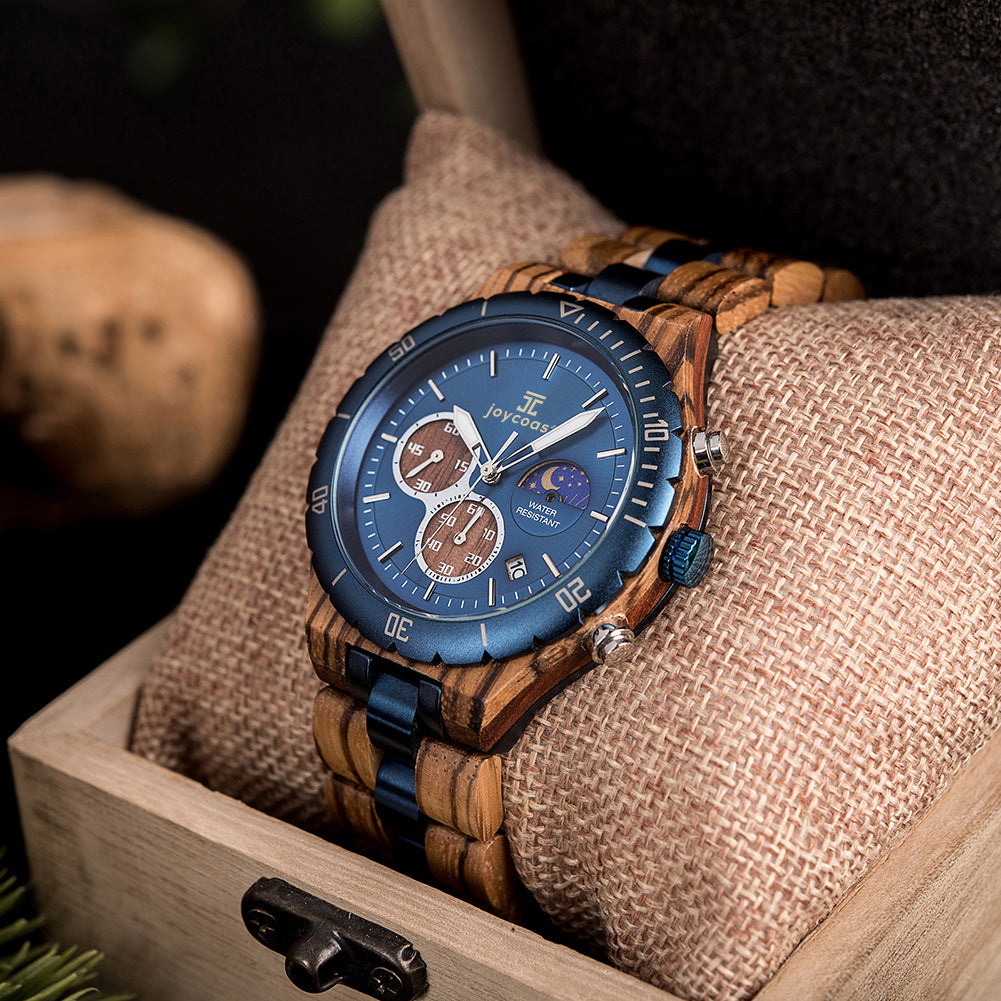





Has your watch stopped, skipping, or not accurately keeping time? Most often, that means the battery has run out of power. Instead of sending your watch to a repair shop, you can quickly replace the battery yourself at home with a few simple tools and this easy-to-follow guide.
(Alternatively, if your watch is a Joycoast watch, you may bring it to our brick and mortar store in Lincoln Park, Chicago, IL and we offer fast and inexpensive battery changes in-store.)
Changing a watch battery is one of the most practical DIY skills you can learn, whether you have a classic analog watch, a digital timepiece, or a Joycoast wooden watch. Here are some of the batteries that are used in our Joycoast watches, per collection:
|
Joycoast Watch Collection |
Battery Type |
|---|---|
|
Chronograph (sub-dials) 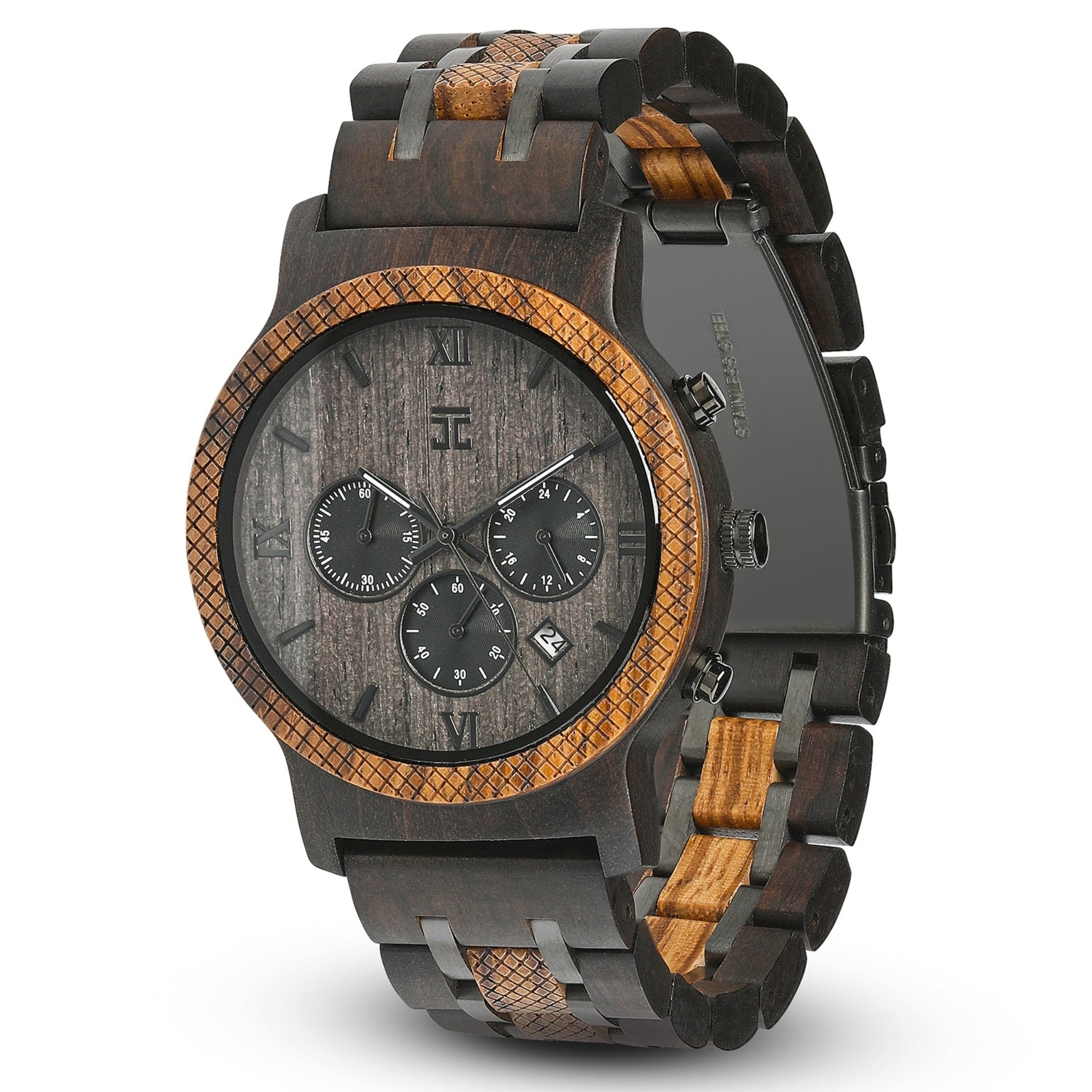 Example of Joycoast Chronograph Watch, (Prince Watch) |
SR920SW / 371 |
|
Kaleidoscope
Example of the Joycoast (Kaleidoscope Watch) |
SR920SW / 371 |
|
OG
|
SR626SW / 377 |
|
Northstar
|
SR626SW / 377 |
|
Mini Northstar
|
SR626SW / 377 |
|
|
SR626SW / 377 |


Notes:
Watch batteries often have two names depending on the brand or standard being used. SR626SW and 377 refer to the exact same battery size and type, just labeled differently by manufacturers. The same applies to SR920SW and 371, which are also identical and interchangeable. As long as the numbers match one of these pairs, the battery will fit and function the same in the watch.
Why You Might Need a New Watch Battery
Most quartz watches use small coin-cell batteries that typically last 1–3 years, depending on watch type and features. When the battery voltage drops too low, the watch may:
-
Stop completely
-
Skip seconds or lag
-
Stops keeping accurate track of time
-
Show a faded or blank digital screen
Recognizing these signs early helps you replace the battery before it corrodes or causes damage.
Safety First: Tools You’ll Need
Before you begin, gather the right tools. These make the process easier and reduce the risk of damage:
Necessary:
✔ Precision screwdrivers (even some phillips screws can be opened with a small flathead, and a small flathead can double as a case opener as well)
✔ Replacement battery (same model as the old one)
Optional, but recommended:
✔ Plastic tweezers (optional, safer for battery handling)
✔ Soft cloth or mat to protect the watch face
✔ Pin tool to remove the clasp connector to expose the case back fully
Choosing the correct size and type of battery is crucial. Wrong battery choices can fit but won’t power the watch correctly.

Step 1: Prepare Your Workspace
Set up a clean, well-lit area with a soft cloth or pad. This keeps tiny parts from rolling away and protects the watch from scratches.
Tip: Wash your hands before you start to avoid leaving oils or debris inside the watch.
Step 2: Identify the Case Back
Watch backs come in a few styles, and how you open them depends on the type. It's important to correctly identify the watch's case back type to ensure you don’t damage the watch when opening up. There are four types of case backs, outlined below, but we will only instruct opening up a case back with screws, as that is the method we use for our Joycoast wooden watches.
Screw back with screws (Joycoast watches)
Used on many mid range quartz watches, smartwatches, and some fashion brands. This is the Common with Joycoast, Fossil, MVMT, Skagen, and watches that need consistent sealing without threads.
Snap on case backs
Common on fashion watches, quartz dress watches, minimalist brands, and many wooden watches. Often used on thinner cases where water resistance is not the main priority.
Screw down case backs
Found on dive watches, sport watches, tool watches, and higher water resistance models. Very common on Seiko divers, Rolex, Omega, and most performance focused watches.
Hinged case backs
Typically seen on vintage watches, pocket watches, and some classic dress watches. Rare on modern watches and usually low water resistance.

Step 3: Open the Watch Back (Watch Backs with Screws)
Using a small precision screwdriver, carefully loosen and remove each screw around the case back. Place the screws somewhere safe so they are not lost. Once all screws are removed, gently lift the case back off the watch. If the back feels stuck, apply light, even pressure and avoid prying forcefully to prevent damage.
Step 4: Locate and Remove the Old Battery
Once the case back is removed, locate the round silver battery inside the watch. Make note of the battery model number printed on it, such as SR626SW or 377, as this will be needed for replacement. Note its position and orientation before removing it. Using plastic tweezers or a non metal tool, gently release the battery from its clip or holder and lift it out. Avoid touching the battery or internal components with your fingers to prevent damage.

Step 5: Choose the Correct Replacement Battery
Check the model number you noted from the old battery and select the same size and type. Watch batteries often use different naming systems, but many are interchangeable.
For Joycoast watches, the most common batteries are SR626SW which is also labeled as 377, and SR920SW which is also labeled as 371. These pairs are equivalent, meaning either designation will fit and function the same. Always match one of these approved designations to ensure proper performance and fit.
Here is a table of other common batteries and designations.
|
Battery Size |
Alternate Designation |
Common Use |
|---|---|---|
|
SR626SW |
377 |
Common with Joycoast watches, slim quartz watches, dress watches |
|
SR920SW |
371 |
Common with Joycoast watches, larger quartz movements, some chronographs |
|
SR621SW |
364 |
Small case quartz watches |
|
SR616SW |
321 |
Ultra thin watches |
|
SR927SW |
395 |
Multi function quartz watches |
Step 6: Insert the New Battery
Place the new battery into the holder in the same orientation as the original battery, matching the positive and negative sides exactly. Gently press the battery into place until it sits securely under the clip or contact. Make sure the battery is flat and fully seated before proceeding, as improper placement can prevent the watch from functioning correctly. Once the battery is inserted (but before the case back is sealed again), you can test the watch by turning it over and checking if it is ticking again.
Step 7: Test the Watch
Before sealing the case back:
Check whether the watch starts running again.
For analog watches, gently press the crown (watch stem) if it was pulled out.
For digital watches, make sure the screen lights up and buttons respond.
If it doesn’t power on, double-check the battery placement and contacts.
Step 8: Reassemble the Watch
Once the watch works:
Snap the case back in place
Screw it back on securely
Replace any removed screws
Be sure to align grooves and ensure the case back fits flush with the watch body.
Tips to Avoid Common Mistakes
Replacing a battery seems simple, but these tips help you avoid common issues:
✔ Use plastic tweezers to avoid shorts
✔ Take a photo before removing the battery so reassembly is easier
✔ Don’t use excess force when opening or closing the case
✔ Be careful with water-resistant watches—they may need professional seal testing after reassembly
Benefits of DIY Watch Battery Replacement
Replacing your watch battery yourself is quick, simple, and convenient. It saves time by avoiding trips to a repair shop and helps you avoid unnecessary service fees. DIY battery replacement also gives you control over using the correct battery type, ensures your watch is handled carefully, and keeps your watch running when you need it most.
Most watch batteries are inexpensive and widely available online or in stores.
When to Seek Professional Help
Consider professional service if:
-
Your watch is a luxury or heirloom piece
-
It has complex internal mechanisms
-
It’s marked water-resistant (seal integrity matters)
Professionals can ensure proper resealing to maintain water resistance.
Final Thoughts
Replacing your watch battery at home is a simple and empowering skill that keeps your watch running without delays, added costs, or unnecessary trips for service. With the right battery, basic tools, and the steps above, most battery changes take just a few minutes. Keep this guide handy for the next time your watch stops, and you’ll be back on time in no time.
If you’re ready for a watch designed to last, explore Joycoast’s collection of lightweight, sustainable wooden watches made for everyday wear.